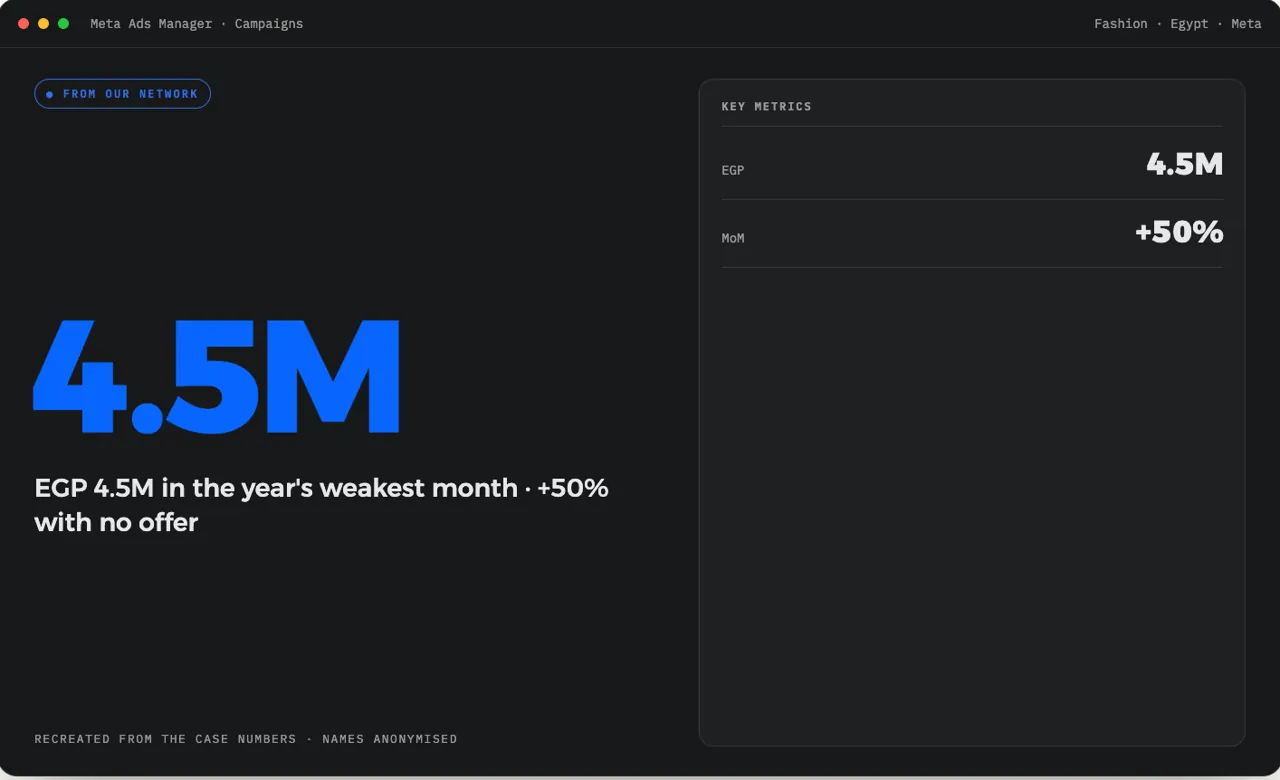
An Egyptian fashion brand grew 50% in the weakest month of the year.
Few details were published, but each one says something. That month is seasonally the weakest in the market, and the market itself wasn't in good shape. Growth was still 50% over the previous month, with no offer running.
The only discounts in play came through the loyalty programme, for existing customers.
That last line is the whole case.
In a weak month every brand makes the same move: 30% off for everyone, to get the market moving. The outcome is familiar. Everyone discounts, so the discount becomes ordinary, margin disappears, and customers learn to wait for the next one. You pay now in order to lose later.
This brand did the opposite. It didn't discount to the market. It discounted to people who had already bought, through a loyalty system rather than an open offer.
That does three things at once. New customers see the full price, so the brand holds its value and its positioning. Existing customers see a reward for loyalty rather than a sale visible to everyone, which brings them back and makes the second purchase easier than the first. And ad spend doesn't need to rise to compensate for a weak season, because a large share of sales comes from a list that already exists.
That explains how the weakest month came in 50% above the one before it. Not through more advertising, but through a customer base built in the strong months and working in the weak ones.
Retention isn't a department. It's your insurance against the season. Without a working list and a loyalty system, every weak month costs you a discount to the entire market.
The lesson
Retention carries the weak months