The brand owner called to say raise the spend. The media buyer refused, and was told: "why are you so worried about my money?"
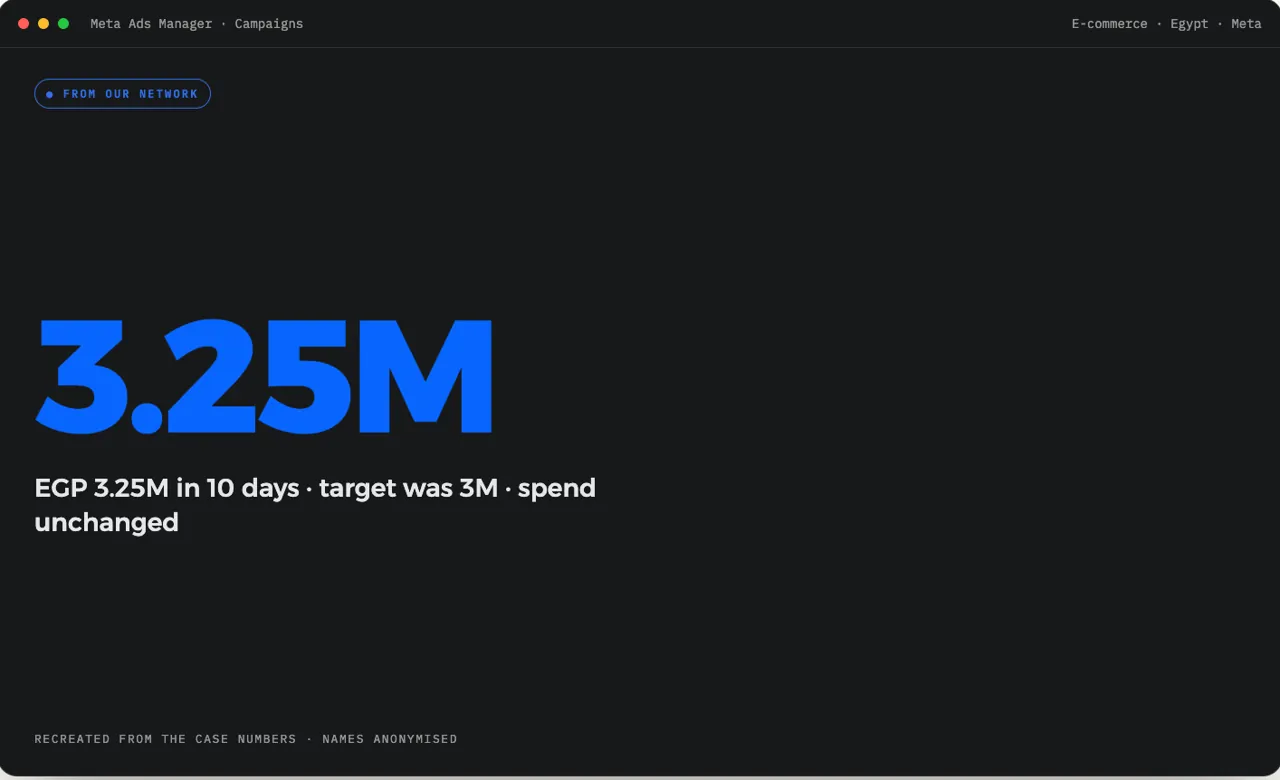
This happened halfway through a campaign with a fixed sales target for the final ten days of the month. The numbers were genuinely running well, which is what made the request look reasonable.
But the refusal wasn't stubbornness. He had a media plan that knew where it was going and where it would land, and raising spend without recalculating breaks the ROAS the whole plan rests on.
Here's the order things actually happened.
The request arrived at the start of the month: a fixed sales target for the last ten days. The first thing built wasn't a campaign. It was the offer.
And the offer wasn't chosen from imagination. They opened the data on every offer from the previous six months, what had worked and what hadn't, with one primary criterion: the offer must raise AOV. Because a target like that in ten days on a small basket needs an order count that's operationally impossible. On a larger basket, the number becomes reachable.
Then forecasting, before a single unit of budget was spent. A full calculation: how do we hit the target at the highest possible ROAS, and at exactly what spend? The historical data answered it, and from that came a media plan with the budget that hits the target at the ROAS they wanted, prepared before the owner even asked for it.
Then the funnel. For the first time an eco-system was built for every stage, each with its own budget and its own KPI, instead of one campaign doing everything and being edited daily. Material was requested in the formats each stage needed, again from data rather than taste.
Only then came the phone call. Numbers were running above forecast, the owner saw an opportunity, and the answer was no.
The result: 108% of target. The target, exceeded, on exactly the spend that was planned from the beginning.
The line he said matters more than the number: "for the first time I feel like I'm doing something based on knowledge, not random experimentation."
The difference between a media buyer and someone pressing buttons is knowing where you'll land before you spend.
The lesson
Spend is a calculation, not a reaction