The target was ten times the budget. It was beaten, on less spend than planned.
That last part is what deserves attention, because hitting a target is one thing and hitting it while spending less is another entirely.
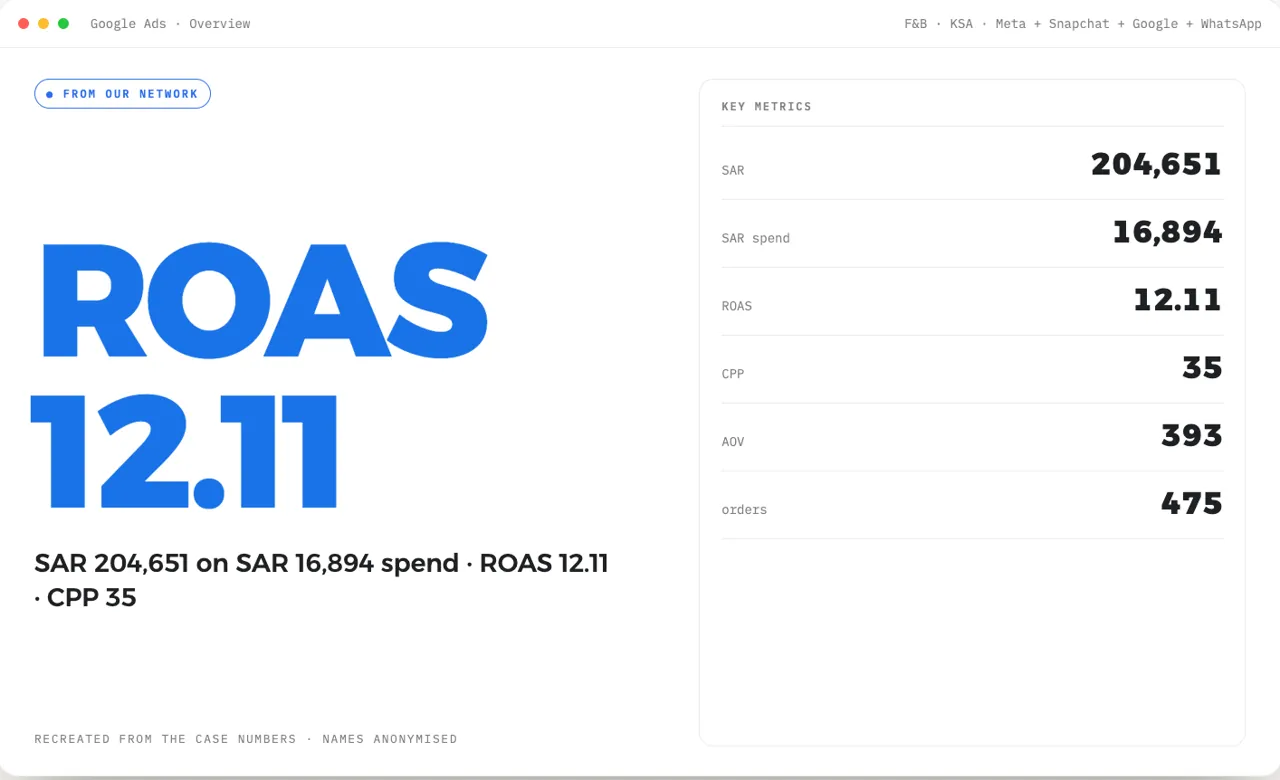
Full November numbers for a niche food and beverage brand in Saudi Arabia: 475 orders, ROAS 12.11.
So how did spend fall while the target was beaten?
Two things.
First, no single platform was carrying the month. Meta, Snapchat and Google ran together, so when one dipped another compensated, and nobody had to pour spend into a weakening platform to chase the number.
Second, and this is what actually mattered: three WhatsApp campaigns a month to existing customers, telling them about the discount and the new products. On the day a message went out, orders were consistently strong.
That means a portion of the 475 orders arrived at zero advertising cost, which is precisely what pushed spend below plan and ROAS up to 12.
Why does this work in food specifically? Because the product is repurchased. Someone who bought last month needs to buy again this month. They don't need an ad to persuade them, they need a reminder at the right moment.
Look at the arithmetic: advertising pays about 9% of the first order's value. On the second order, the one that comes from WhatsApp, it pays nothing.
If you sell a consumable and you're budgeting on advertising alone, you're budgeting wrong. Part of your sales should come from a list, not from an auction.
For repeat-purchase products, the WhatsApp list isn't a support tool. It decides whether you hit target on budget or under it.
The lesson
WhatsApp is a scheduled sales channel