An ad account with zero history. No pixel, no events, no data. The account itself was handed over late, the peak season was already starting, the whole region was unstable and tourism was affected.
That's the normal scenario on most projects, not the tidy one in courses.
The venue was a tourist site with family activities, peak season arriving before Eid, and a client who wanted bookings.
The first thing anyone will say: time is short, set everything to conversion from day one. That's the worst decision available.
Why? TikTok moves through three stages: exploration, learning, optimisation. During exploration it spreads impressions widely to gather signals, who completes the video, who engages, who clicks. Without signals the algorithm stays stuck there while you pay. Meta is the same story: a new pixel with no conversion history fires more or less blindly, and you pay three or four times the learning cost.
The answer isn't patience. It's building the signal yourself.
The first three days were signal generation. Reach and video views on specific interests: hotels and tourism, Eid activities, family entertainment. Not random broad. Content about the place, the energy and the experience, not "book now," because you're speaking to people who don't know you yet. The KPI wasn't orders, it was thruplay rate and cost per engaged user. Anyone watching past 50% became a signal, anyone engaging became a warm audience. Spark Ads with original content took distribution priority because the algorithm treats them as native.
Days four to seven were intent qualification. Traffic against custom audiences: 50%+ viewers, engagers, profile visitors, and lookalikes from clickers. Content changed to activities in detail, prices and availability, because now they know you and need a reason to book. This stage is also diagnostic: clicking but not completing means the booking flow is the problem; not clicking at all means the creative isn't carrying the value.
Days eight to ten were conversion activation. Only here was conversion switched on, because the pixel had learned, retargeting pools were ready and the algorithm had passed exploration. Retargeting hit site visitors who hadn't booked with a limited-availability message, and broad conversion performed far better because the pixel now understood who should see the ad.
The final day or two was value extraction. No experiments. The best ad set at the lowest CPA takes the largest budget, anything expensive stops, and retargeting takes the biggest share.
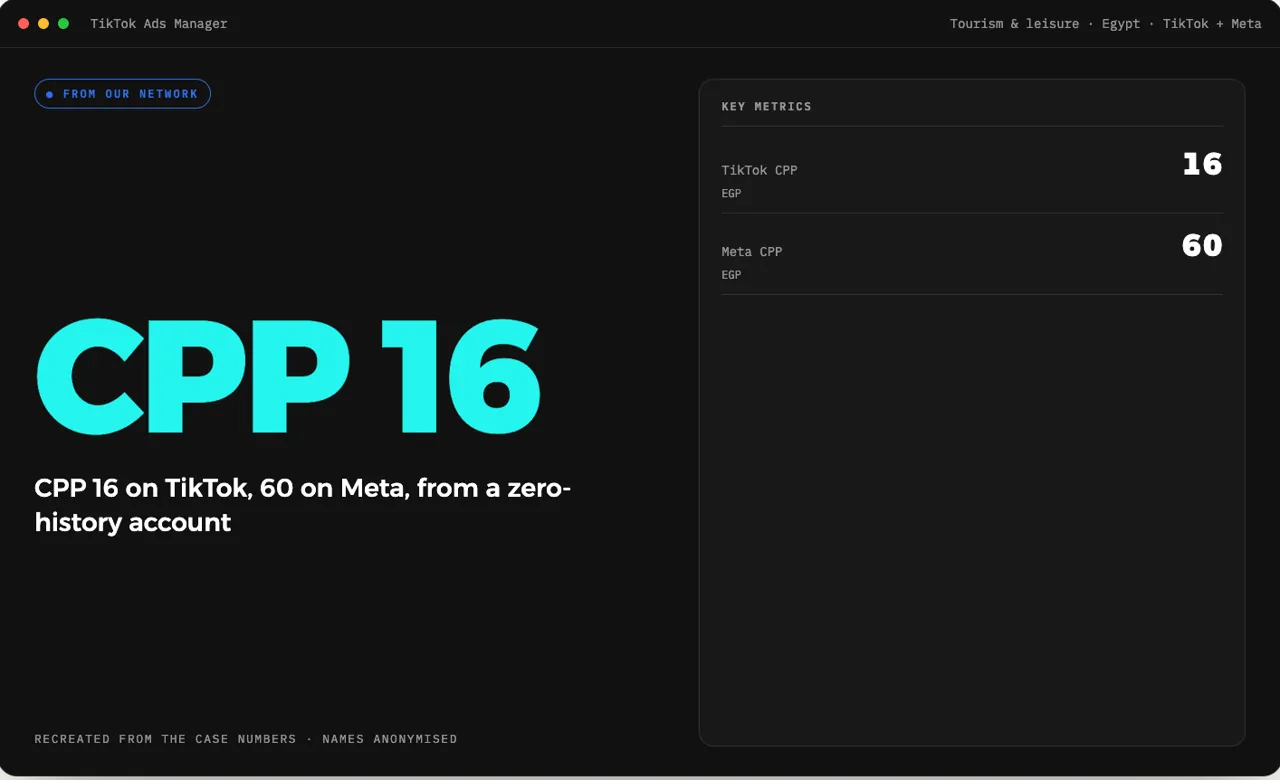
The result: bookings at 16 on TikTok and 60 on Meta.
But the explanation isn't that TikTok is better. TikTok runs on an interest graph, delivering content by behaviour, and desire gets created in the moment, people watch and book. Meta was the closing machine, recovering those who looked, cared and didn't book. That second push costs more, but without it those people are lost.
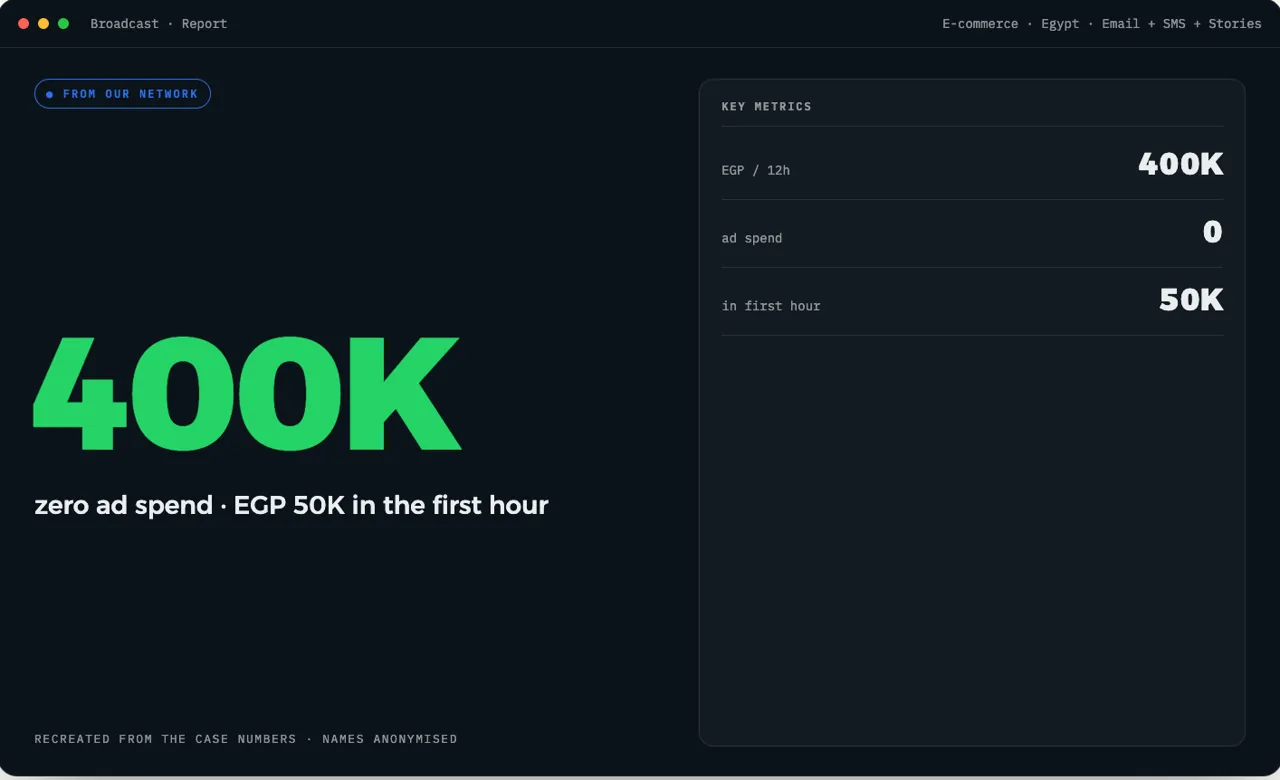
The following week the ads stopped, and on one day with zero ad spend sales came through, because the targeting had been interest-based on genuinely interested people who came back on their own once they decided.
The mistake is judging both platforms on the same metric. TikTok is cost per new customer; Meta is cost per recovered intent.
The lesson
Build the signal before asking for conversions